
13 Surprising Facts About Zero Gravity Massage Chairs Nobody Tells You Before You Buy One
You’ve seen the ad. Someone leans back, the chair swallows them whole, their face goes slack with relief, and a voiceover says something about “NASA technology.” It looks a little ridiculous. It also happens to work, for reasons most people never look into before they buy — or don’t buy.
Here are 13 facts that explain why these chairs have quietly become among the most-searched home wellness purchases in the country, and what almost nobody mentions before you hand over your credit card.
1. The “Zero Gravity” Position Was Never Designed for Comfort
It was designed to keep astronauts alive. NASA needed a body position that survived the crushing G-forces of a rocket launch without injury. Engineers found that reclining the body to about 128 degrees, with the knees raised above the heart, distributed weight so evenly that the spine experienced almost no load. Comfort was a side effect. The real goal was not breaking a human spine during liftoff.
2. Your Spine Is Under Pressure Right Now, Even Sitting Still
Standing upright, your lower spine supports roughly the weight of your upper body. Sitting in a normal chair, that pressure actually increases because your hips tilt and your lower back rounds. The zero gravity position is one of the only postures that meaningfully reduces spinal disc pressure below resting levels — which is why people with herniated discs often feel instant relief the moment the chair reclines, before any massage even starts.
3. Most “4D” Massage Chairs Aren’t Really 4D
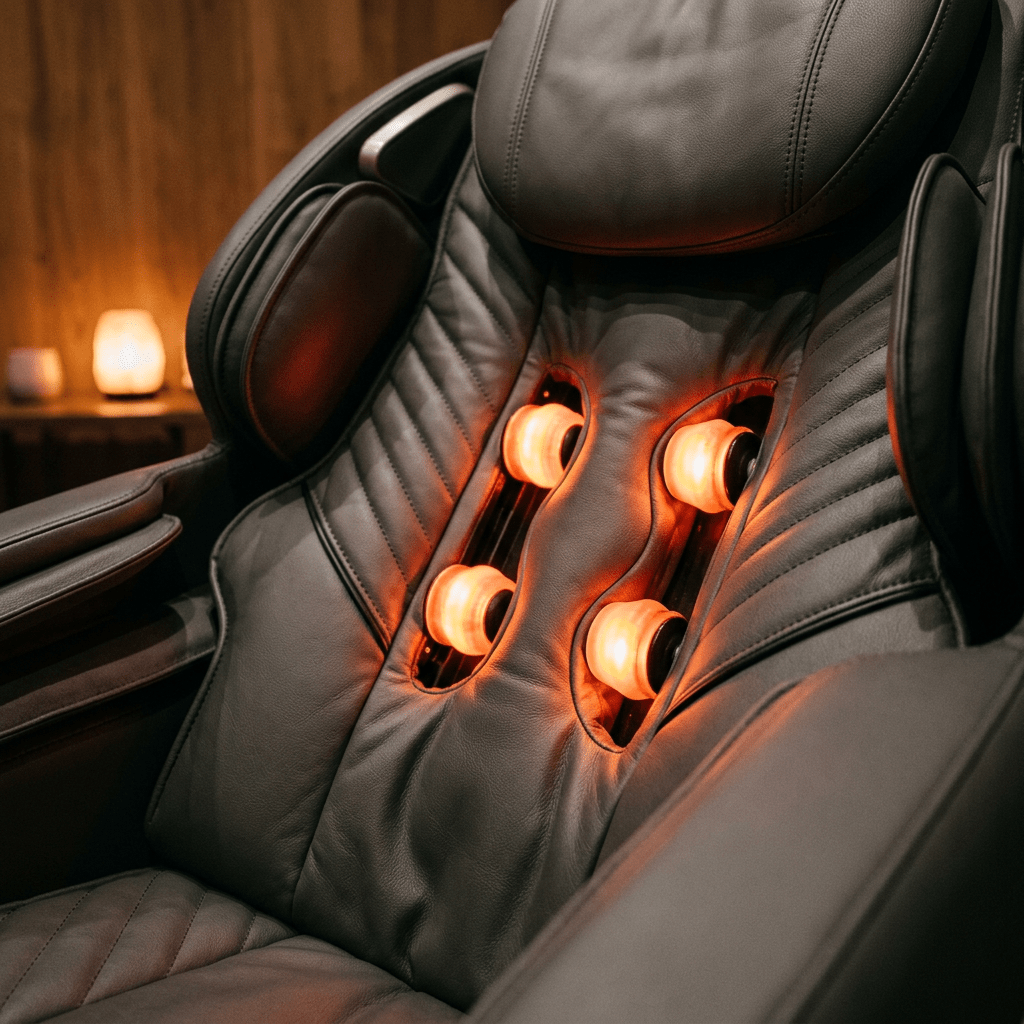
The rollers can move up and down (that’s 1D), in and out for pressure depth (2D and 3D), and adjust speed and rhythm to feel less mechanical (the “4D” claim). But plenty of chairs slap “4D” on the box without the hardware to back it up. The real tell isn’t the label — it’s whether the massage speeds up and slows down unpredictably, mimicking a human hand, or just repeats the same rhythm on a loop.
4. A Massage Chair Can Pay for Itself Faster Than You’d Think
A single one-hour massage at a spa runs $80–$120 in most U.S. cities. A mid-range zero gravity chair costs $1,200–$2,500 — meaning if you’d otherwise get even one professional massage a month, the chair breaks even in under two years, and every session after that is free.
5. Foot Rollers Are Doing More Than You Realize
Your feet contain over 7,000 nerve endings and a dense network of blood vessels that rely partly on muscle movement to push blood back up toward your heart. That’s why foot and calf compression — a feature people often dismiss as a gimmick — is actually one of the most clinically supported features for improving circulation in people who sit most of the day.
6. The Chair Doesn’t Know Your Body Unless It’s Told
Cheaper chairs run a fixed roller pattern regardless of who sits in them. Better chairs use body scanning — small sensors that measure shoulder width and spine length in the first few seconds — so the rollers actually match your anatomy instead of a generic average body. Skip this feature and even an expensive chair can hit the wrong spots.
7. Zero Gravity Chairs Need More Room Than the Photos Suggest
Online product photos rarely show the chair fully reclined against a wall. Most true zero gravity chairs need 4 to 8 inches of wall clearance to recline properly, and some need considerably more. This is the single most common reason people end up disappointed after buying — not the massage quality, but discovering the chair can’t fully recline in the spot they planned for it.
8. There’s a Reason Airlines Use the Same Position
Several airlines have designed business and first-class seats around zero gravity–inspired recline angles, specifically to reduce the swelling, stiffness, and lower back pain associated with long-haul flights. If you’ve ever landed after a red-eye and felt surprisingly fine in a lie-flat seat, you’ve already experienced a version of what these chairs are trying to replicate at home.
9. Heat Isn’t Just for Comfort — It Changes How the Massage Works
Applying heat before mechanical massage increases blood flow and makes muscle tissue more pliable, which means the rollers can work more effectively and with less discomfort. Chairs that only offer heat as an afterthought, rather than timing it to activate before the roller pass, are giving you a weaker version of the same feature.
10. Most People Use Their Chair Wrong in the First Week
The instinct is to crank the intensity to the highest setting immediately. Massage therapists generally recommend the opposite: start at low-to-medium intensity for the first several sessions to let your muscles adjust, then increase gradually. Chairs used at max intensity from day one are also the ones most commonly returned, because the first impression is discomfort rather than relief.
11. The Warranty Fine Print Is Where Chairs Quietly Differ Most
Two chairs can look nearly identical on the outside and have wildly different coverage — some warranties cover the frame for 5 years but the motor for only 1. Since motors and airbags are the most common failure points, checking parts-and-labor coverage on those specific components matters more than the overall “years” number advertised on the box.
- Is a Zero Gravity Massage Chair Worth It? An Honest Cost-Benefit Breakdown
- 13 Surprising Facts About Zero Gravity Massage Chairs Nobody Tells You Before You Buy One
- Zero Gravity Massage Chairs: The Complete Buyer’s Guide
12. They’re Not Just for Bad Backs Anymore
While back pain is still the number one reason people search for these chairs, a growing share of buyers are people managing stress and sleep issues rather than physical pain. Reclining into a supported, weightless position lowers heart rate and activates the parasympathetic nervous system — the same system responsible for winding the body down before sleep.
13. The Best Chair for You Probably Isn’t the Most Expensive One
Past a certain price point — usually around $2,500 — additional cost tends to buy convenience features like voice control, Bluetooth speakers, and app connectivity rather than meaningfully better massage therapy. For most people dealing with everyday tension and stiffness, the real jump in quality happens between entry-level and mid-range chairs, not between mid-range and luxury.
The Takeaway
The NASA origin story is the fun fact that gets people curious. The spinal pressure science is the reason the chairs actually work. And the room-clearance and warranty details are the boring-sounding stuff that determines whether you’re happy with your purchase in six months or wishing you’d researched a little more first.
If you’re shopping for one, the smartest move is deciding what problem you’re actually solving — back pain, poor circulation, or general stress — before comparing models, since that answer changes which features are worth paying extra for.
Discover more from Stress Free In Zero Gravity
Subscribe to get the latest posts sent to your email.

